A naming brief can sound perfectly reasonable: something short, credible, easy to pronounce internationally and flexible enough to grow with the business. Ideally, with a workable domain too. The difficulty comes when one name has to satisfy all of those requirements, and improving one part makes another worse.
Before comparing words, I want to understand what the company needs people to recognize about it, who it is speaking to and how much the offer might change. Otherwise, it is easy to discuss a long list of names without agreeing on what would make any of them suitable. People can be judging the same word against quite different ideas of the company.
A descriptive name might help explain an unfamiliar product, but it can become restrictive if the business moves beyond that product. An invented name gives you more room, although the communication has to help people understand what sits behind it. Neither is automatically better. These are choices about what the name should do and what can be explained elsewhere.
Trying the names
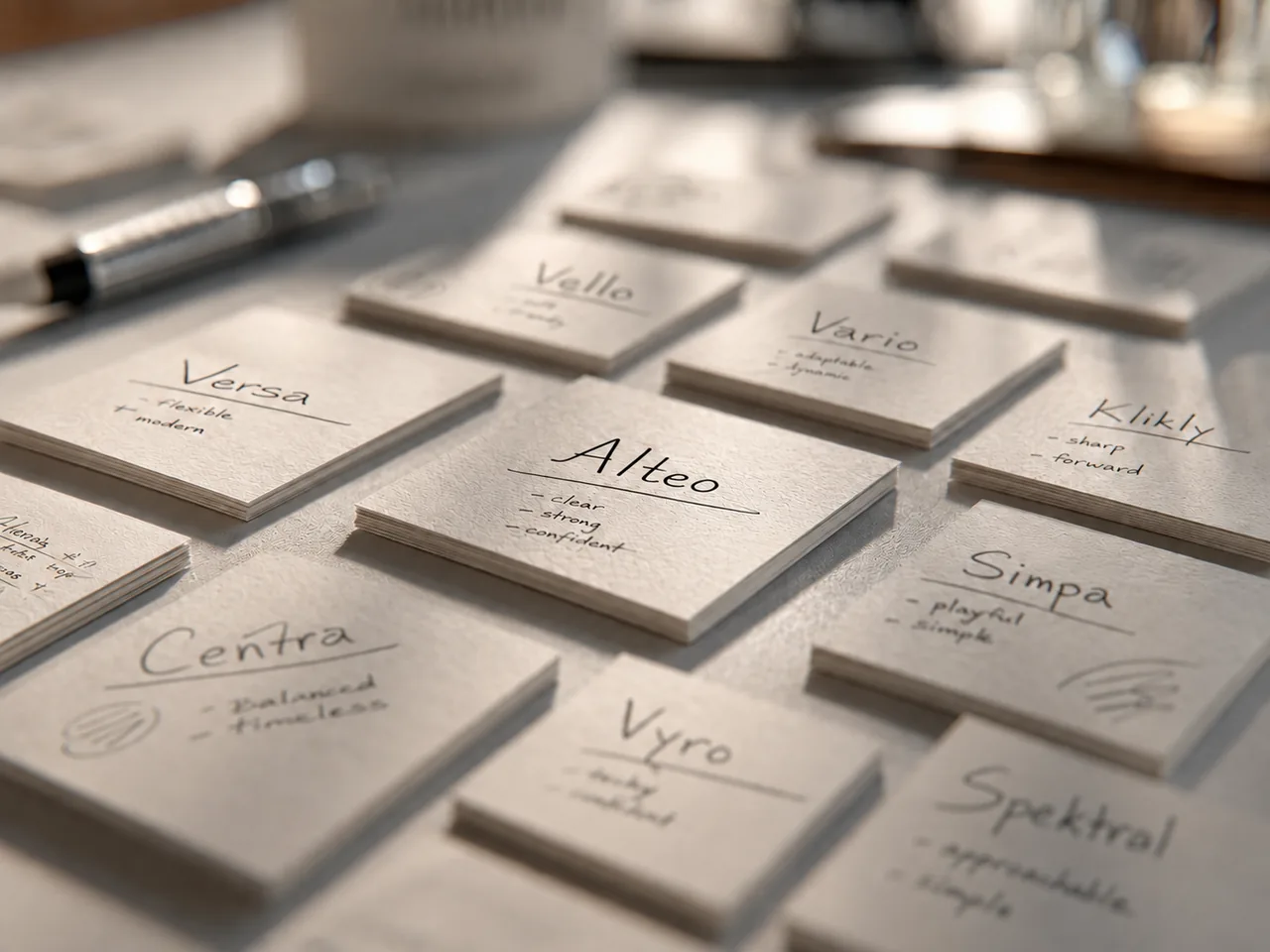
Once there are candidates worth considering, the tests become fairly ordinary. Say the name in a sentence, hear someone else pronounce it, try writing it down after hearing it. The amount of explanation or correction it needs tells you something. For international use, you also need to check what it means or resembles in the relevant languages, and whether it is too close to a competitor.
An available domain is useful, but it is only one reason to keep a name on the list. The name still needs to be memorable and suitable for the business. Finding a domain should not bring that discussion to an early finish.
The options you reject can help here. Comparing a few names may reveal that a descriptive route feels too narrow, or that the more unusual options are difficult to use. That gives the next round something to work with. A longer list is not necessarily a problem; a list with no clear basis for choosing is.
From a name to an identity
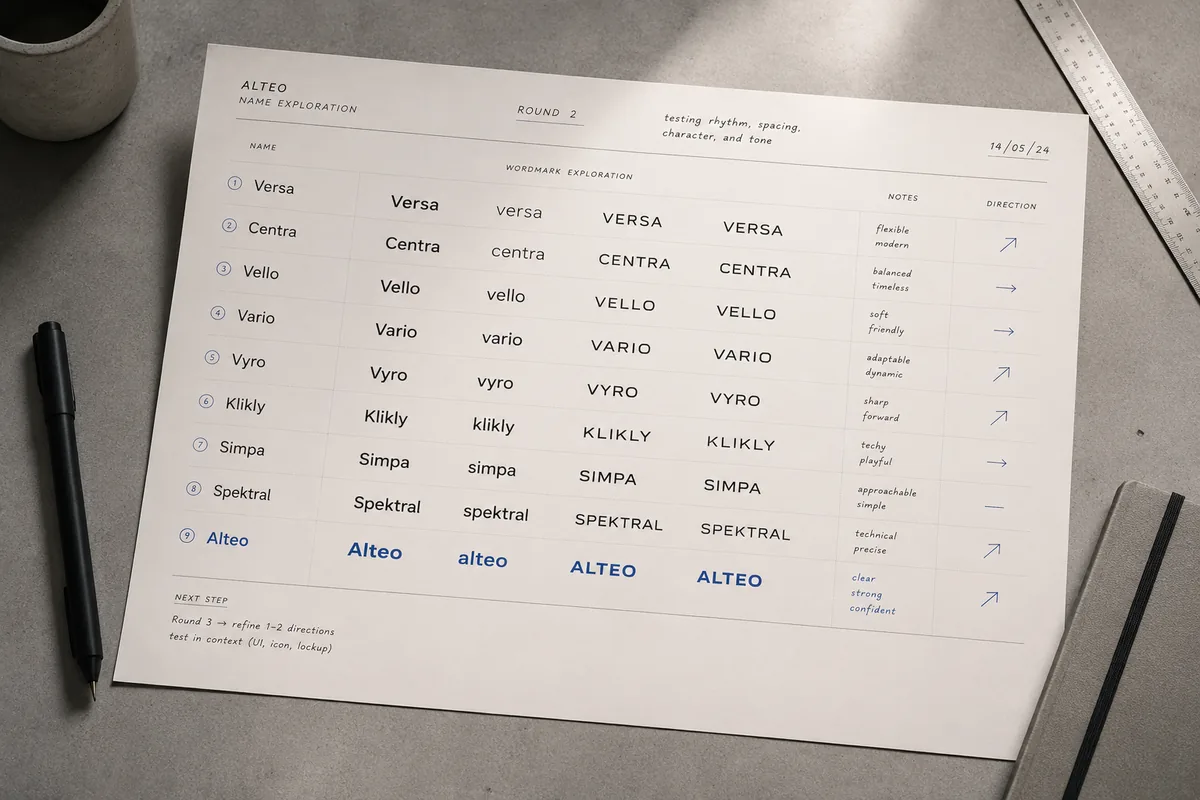
For me, the visual side belongs in this process as well. A name that sounds convincing can feel awkward once you start setting it in type. The length, letter combinations and spacing all become visible. Another candidate may have a rhythm that was easy to miss in plain text. Looking at that early helps connect the naming decision to the identity that will follow.
Alteo is a useful example. The business was already operating as an online retailer under the name Bisshop and needed a new name and identity. The brief kept returning to the ideas of an alternative and clarity. Those ideas gave the naming work a direction without requiring the name to describe everything the store sold.
The candidates were explored in type before the final direction was chosen. That brought the words and their visual possibilities into the same discussion. The identity work then continued into the wordmark and its use across the store and retail communication.
This does not mean choosing whichever name makes the nicest logo. The visual test sits alongside pronunciation, meaning and practical use. A promising letter combination is not enough to rescue a name that creates problems everywhere else.
There is still judgment involved. A name can meet the practical requirements and remain forgettable, while an unfamiliar one may need some time before people feel comfortable with it. The strongest reaction in a presentation is useful feedback, but I would also want to see how the name feels in an ordinary sentence, an email signature or a product page.
I want a name people can remember and use naturally, with enough character to build an identity around and enough room for the business to change. The product, communication and the way the company behaves will give it more meaning over time. The name needs to make sense in that company, not only on the slide where we first present it.