A portfolio usually brings a project back into a presentation I control. I choose the images, decide what needs explaining and leave quite a lot out. When someone else includes a mark in a book or an article, they bring their own reason for looking at it. That can draw attention to a part of the work that deserves a closer look.
The Left wordmark is a good example. David Airey included it in the third edition of Logo Design Love, under “Begin in black and white.” The letters share a construction based on a left-facing arrowhead, so the example makes sense in that section. You can see the relationship between the lettering and the idea without needing the rest of the identity around it.
I’m pleased to have it included. I also like knowing why it is there. The placement gives someone a way to look at the mark, and gives me a useful reference to keep alongside the project.
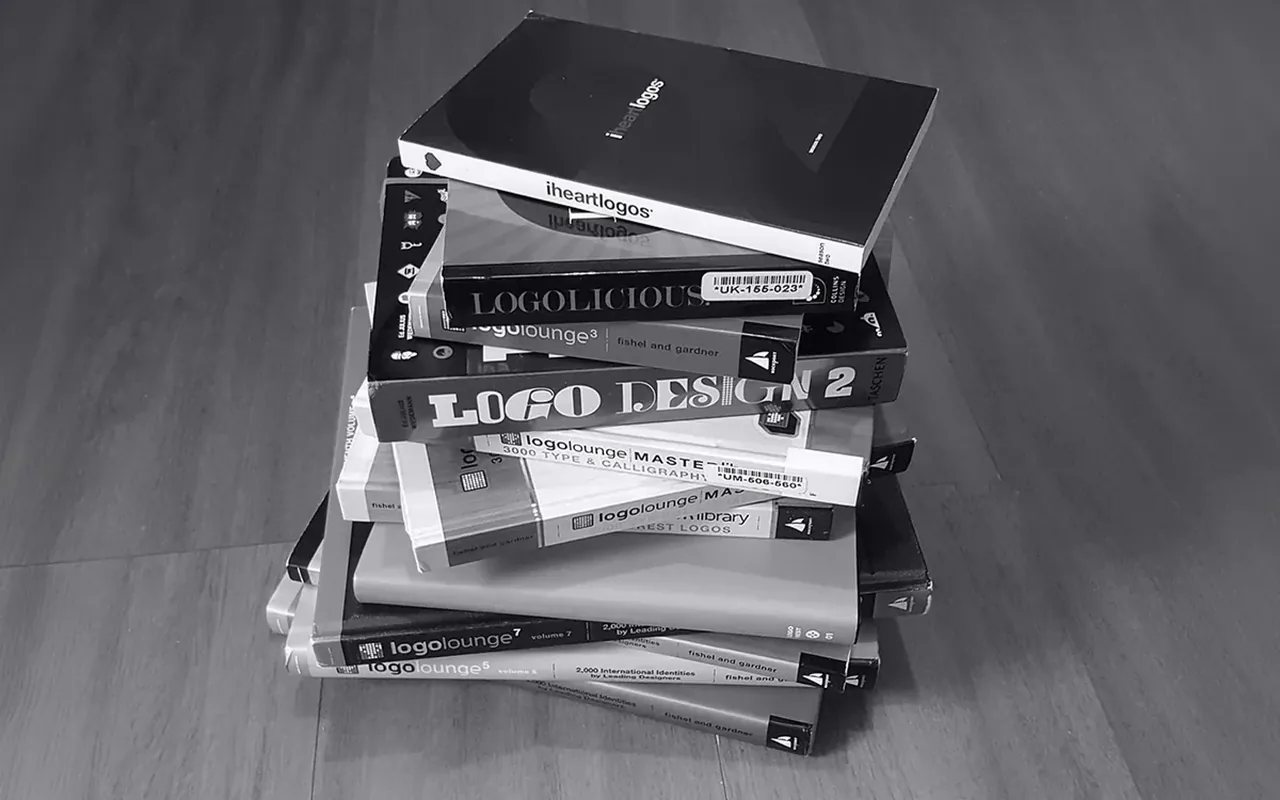
That is the kind of information I want the Published Work archive to preserve: which publication, which year, which project, and enough context to understand the connection. A spread from a book can tell you more than its cover, especially when the surrounding text explains what the editor saw in the work. Where there is a related project on the site, the entry should make it easy to find.
Publication still tells only part of the story. Editors work within particular subjects, formats and preferences, and plenty of good work never reaches those pages. I wouldn’t use the number of appearances to rank my own projects. Some marks simply fit what a particular book or report was looking for.
There is also a practical reason to keep these references together. A published logo may need only a small entry in the Logo Library, with a link to where it appeared. Giving it a full case study would add very little if there is no larger project story to tell.
Over time, the books and references accumulate. Keeping track of them gives me another way to look through the work, sometimes returning to a mark I haven’t thought about in years. I want someone browsing the archive to be able to follow that connection too, from the publication back to the actual design.